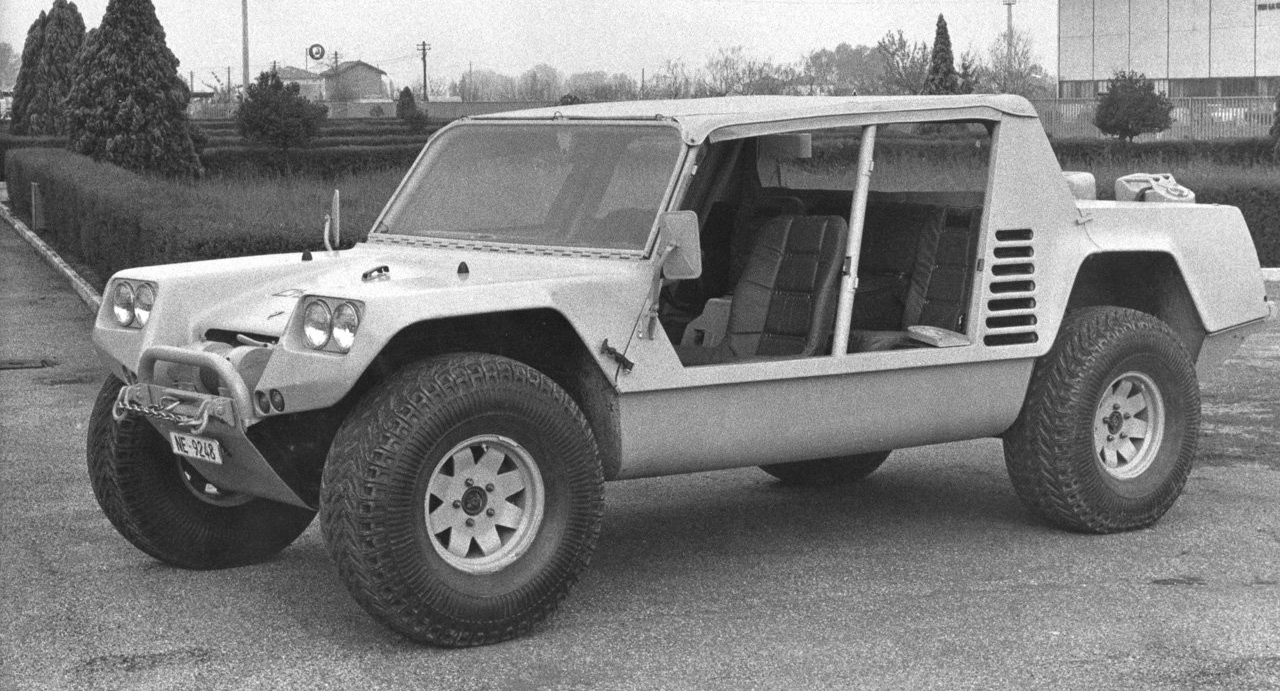
Lamborghini Cheetah
The Lamborghini Cheetah was never actually tested or even owned by the military, but Mr Pharis did conduct demonstration runs for military personnel … note the Cheetah managed to reach top speeds of 105 mph (that’s 170Km/h) in the late Seventies, which was rather impressive for an off-road vehicle.
|
|---|
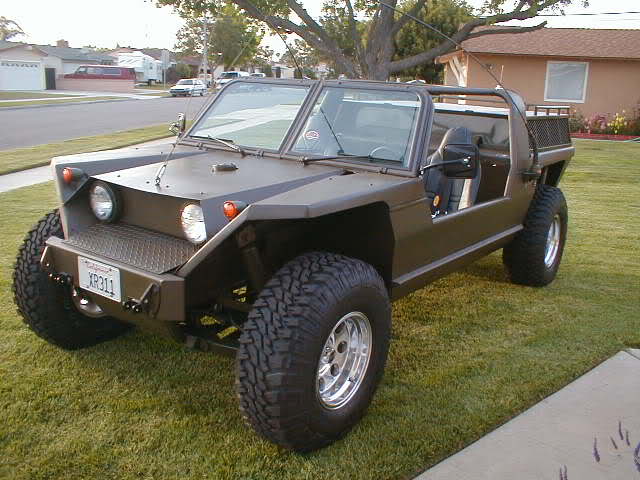
FMC XR 311
In the late ’60s, a new American military vehicle type was born. Initially termed the High Mobility Combat Vehicle, the concept envisioned a fast, multi-purpose light vehicle. A number of companies vied for the contract and a few now-famous vehicles branched out from this developmental tree, including the Lamborghini Cheetah, the military HUMVEE and its civilian counterpart the Hummer H1. Lesser known is the winner of the contract to develop the new vehicle, and the root of the tree, the Ordnance Division of FMC (Food Machinery Corporation), who built a prototype called the XR311.
|
|---|
Rene Leimer, новому хозяину Lamborghini, для поправки финансового положения удалось заключить контракт с BMW - (проект E-26, разработка супекара M1, дизайнер Джуджаро) и с MTI (Mobility Technology International) - разработка военного внедорожника Lamborghini Cheetah
Per cercare di salvare la quasi disperata situazione patrimoniale e finanziaria Lamborghini, Leimer decide di cercare nuovi contratti esterni e riesce a ottenere un duplice successo: con BMW si sviluppa il progetto E-26, ovvero la famosa BMW M1 disegnata da Giugiaro e destinata ad essere prodotta nello stabilimento di Sant'Agata Bolognese, mentre in terra americana ci si accorda con la neonata MTI ( Mobility Technology International) per la realizzazione della Cheetah, fuoristrada destinata al mercato militare e sviluppata secondo le specifiche statunitensi HMV (High Mobility Vehicle).
Основные конструктивные решения принадлежали MTI.
Прототип в виде конкурсного образца был построен калифорнийским КБ MTI, входившим в корпорацию Chrysler, и отправлен в Сант-Агата Болоньезе, Lamborghini для доведения до предсерийного производства.
В связи с тем, что конструкция Cheetah в значительной степени напоминала XR311 (прототип, разработанный для военных в 1970 г. ) последовал иск FMC к MTI и Lamborghini в 1977, после представления Cheetah на автосалоне в Женеве.
Единственный законченный прототип не проходил испытания в вооруженных силах США.
Был проведен только рекламный показ для военных в штате Юта, организовааный Rodney Pharis (president of US based defense contractor Mobility Technology International).
Позднее lamborghini-cheetah был продан Teledyne Continental Motors.
Провал проекта Cheetah привел к отмене контракта Lamborghini с BMW..
The first of these was the worst. MTI (Mobility Technologv International) an American company, wanted Lamborghini to develop an extreme off-road vehicle capable of climbing through all sorts of terrain at very high speeds for military purpose. While Lamborghini and the young engineer Franco Baraldini started on the off-roader. MTI got into copyright disputes with Ford over allegations that the car was a copy of the Ford XR 311.
When the finished car was shown at the Geneva Motor show in 1977, it was displaced as the Lamborghini Cheetah. Not surprisingly, money to develop the vehicle further wos non existent and the car disappirared from sight (but would later resurface as the mighty LM-series).
The second project was far more promising Luigi Capellini, the senior engineer introduced BMW to the factory and secured an agreement to develop the new E26 project, the BMW M1 supcrcar. Four prototipes were commissioned by the German. Soon afterwards, BMW approved the car and entered into a production agreement with Lamborghini. BMW would supply components on credit and prepay for parts acquired by Lamborghini from outside suppliers. This was, on paper, a highly attractive contract for Lamborghini, and Dallara worked hard on the suspension and tyre programm of the M1 in parallel with thc new Countach LP40O S.
Again, money was non-existent, and Lamborghini had to ask BMW for 500,000 doll loan. Not surprisingly, the German factory lost confidence and decided it was too risky to invest such amounts of money into an Italian sports car firm that would have been long since shot if it was a real bull.
The Cheetah and the BMW supercar projects were not only stranded because of financial problems, they also created tension among the leading figures at the factory. Leimer and Baraldini were enthusiastic about the Cheetah project, while Capellini regarded it as a waste of resources. Baraldini left and his place was taken over by Marco Raimondi.
Bizarrely, Capellini and Raimondi then set up ltal-Engineering to liberate the components needed to see the MI go into production. Other Italian companies built various parts, before Baur assembled the car in Germany. Which meant that just as Lamborghini sunk to the bottom of the sea without а managing director or a financial controller, the BMW Ml entered production.
Capellini felt he had done his almost to keep Lamborghini alive, as these from a 1979 interview with Sportscar World show:
"I put everything into trying to keep Lamborghini afloat, and for three years I succeeded. I was shattered when the deal with Walter Wolf wasn't going to go through. That was our big hope. After that failed, I struggled on and got the government money. But it became impossible for me to stay on any longer than mid 78. The situation had become so bad that there was no opinion but controlled administration, take-over or bankruptcy. And if the company is taken over by someone with the money and the know-how to make it work, they would not want to keep me on. There would have to be a scapegoat and as managing director I would have been it. I am sorry it has ended like this. I really love Lamborghini. But the whole history of the company is full of mistakes, each one linked to the next, and my task, coming in when the factory was on the verge of collapse, proved to be impossible. For 18 months, Leimer, Baraldini and I worked well together. But the Cheetah came between us and fractured the relationship."
The Book of the Lamborghini Urraco, Arnstein Landsem
| Внедорожные траспортные средства (Land Locomotion – Mechanical Vehicle Mobility LL-MVM) Home |